
Safer Nights Behind the Wheel: Seeing Clearly, Staying Alert, Avoiding Hidden Hazards
Dark roads hide more than most drivers realise, from pedestrians in dark clothing to animals near the shoulder and hazards that only appear at the edge of the beam. Add fatigue, wet windshields and dazzling oncoming lights, and everyday evening journeys quietly demand sharper skills and planning.
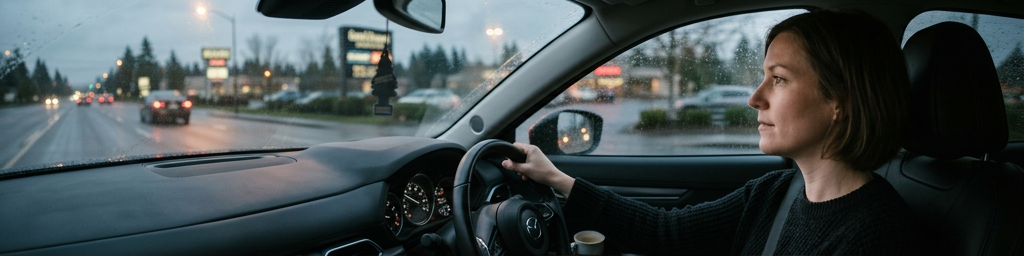
This story is part of Esgamesol's practical reading library across everyday topics.
Seeing Clearly When the World Goes Dim
Simple checks that quickly improve what you can see
Clarity at night starts with basic routines rather than gadgets. Clean glass, healthy lighting and a calm cabin environment all shape how much detail reaches your eyes. A quick walk‑around before setting off can reveal dim lamps, cracked covers or misted lenses that silently shorten your view. Looking at your car’s reflection in a window or garage door makes it easier to spot one side weaker than the other, a beam pointing too high, or a dead bulb at the back.
Inside, the windshield often gathers a thin greasy film that only shows up after dark as halos around streetlights and other vehicles. Wiping the inside as carefully as the outside can sharply cut glare. The same goes for side windows and mirrors, which need to be clear for spotting movement at the edge of your vision, where many surprises begin.
Using light without blinding yourself or others
Light should help you, not work against you. On quiet unlit stretches, full beams extend your reaction time, but they need to go down early when you see distant headlights or tail lights ahead. Dipping them a fraction sooner than feels necessary is a small courtesy that also reduces the chances of others drifting toward you because they are dazzled.
Inside the car, bright screens and dashboards shrink your night vision. Turning down brightness until instruments are just easy to read lets your pupils open wider and improves contrast outside. Navigation apps usually offer dark themes; using those keeps your attention on the road instead of the glowing map. Even small changes here can make wet roads, markings and subtle shadows easier to read.
| Before you set off in the dark | Why it matters for visibility (no guarantees, only tendencies) |
|---|---|
| Walk once around the car and glance at all lights | Makes it more likely you notice weak or failed bulbs before others have to react to them |
| Wipe inner and outer glass if halos or streaks appear | Tends to reduce scattered light and eye strain on busier routes |
| Dim screens and dash to a comfortable low level | Often helps your eyes adapt better to the darker surroundings outside |
| Choose a calm audio volume and source | Can make it easier to notice subtle road sounds and stay visually focused |
Training your eyes to look in the right place
Where you look matters as much as how well you see. Fixing your gaze just beyond the bonnet keeps your attention too close; instead, aim your focus well ahead, using lane markings, kerbs and distant lights to understand what is coming. Let your eyes sweep regularly from far ahead, to mirrors, to the near foreground, then back out, building a steady rhythm of scanning.
When bright oncoming lamps appear, avoid staring at them. Gently slide your gaze toward the nearside edge line or verge while keeping the other vehicle in your peripheral vision. This reduces the punch of the light entering your eye and shortens the time your vision feels washed out afterwards. With practice, this becomes as automatic as checking mirrors.
Staying Awake, Not Just “Powering Through”
Reading your own early warning signs
Sleepiness rarely arrives all at once. Heavy blinking, repeated yawns, drifting slightly within the lane, or having no memory of the last minute of driving are all flags that attention is slipping. Missing a familiar turnoff or reacting late to a green light changing are more signs that your brain is a step behind the road.
Many drivers have long commutes after full workdays, so evening trips often begin already tired. Planning food, breaks and timing around that reality helps more than relying on willpower. Very large, heavy meals, strong drinks or sugary snacks close to departure often encourage drowsiness later, even if they feel comforting at first.
Using breaks and stimulation wisely
Short, regular breaks beat one long stop taken when you are already exhausted. Getting out, walking a little, stretching shoulders and legs, and breathing cooler air can wake you up far more effectively than simply refuelling and rushing back onto the road. Even a few minutes in a safe, lit area resets both body and attention.
Caffeine can support, but not replace, real rest. A drink may briefly sharpen you, but the boost can fade suddenly, leaving a stronger dip. Treat it as a helper used alongside planned pauses, not as a licence to push on for hours. If passengers are with you, light conversation can help hold your focus; if they say you look worn out, treat that as useful feedback rather than fuss.
Reading the Road, Not Just Following the Car Ahead
Spotting patterns in light, shadow and movement
In the dark, the road becomes a moving puzzle of patches and reflections. Learning to read that puzzle makes it easier to stay ahead of trouble. Long lines of small reflectors or posts curving away can hint at a bend or slip road before the asphalt itself is obvious. Sudden gaps in buildings or streetlights often signal rural sections, where pedestrians, cyclists or animals may be closer to the carriageway.
Shiny patches on the surface can mean standing water, damp leaves or spilled fluid, each of which can change how the tyres grip. Dark humps or shapes breaking the pattern may be debris, a broken‑down vehicle or a dropped load. Treat these hints seriously by easing off the accelerator early, checking mirrors, and being prepared to steer smoothly around whatever appears.
Giving yourself more room and time
At night, less information reaches you, so it makes sense to buy more time with modestly lower speeds and larger gaps. Keeping enough distance from the vehicle ahead allows their brake lights and lane position to act as early indicators of bends, bumps or hazards you have not yet seen. On wet or unlit sections, gently increasing that space can turn sudden stops into calm, progressive braking.
Side space matters too. In built‑up areas, try to keep a small margin from parked cars, doorways and driveways, where people or pets may step out unexpectedly. In country areas, be ready for wildlife near hedges or verges and accept that slowing down is a valid response to uncertainty, not a sign of weak driving.
| Situation on a typical night trip | A cautious adjustment that often helps |
|---|---|
| Long, empty dual carriageway feels hypnotic | Add more frequent short breaks and slightly lower speed to counter monotony |
| Narrow lane with parked cars both sides | Increase lateral space where possible and drive more gently past openings |
| Unfamiliar rural road with no lighting | Travel at a pace that keeps stopping distance within your headlamp reach |
| Wet or misty conditions with fuzzy reflections | Increase following distance and rely more on low beams and road edge guides |
Handling Bright Light, Weather and Other Real‑World Messiness
Reducing the sting of glare and reflections
Glare becomes stronger when it bounces off dirty or wet surfaces. Clean glass and healthy wipers limit that effect, but there will still be moments when mirrors or road signs flare. Many interior mirrors in common vehicles have a night setting; using it early in the evening softens sharp reflections from following traffic. Slightly tweaking side mirrors so direct beams fall just outside your eyes while still covering adjacent lanes can also help.
Inside the cabin, avoid shiny ornaments on the dashboard and dangling objects that reflect lights into your line of sight. If you wear glasses, anti‑reflection coatings can make each oncoming lamp feel a little less aggressive, easing tiredness over longer journeys.
Adjusting calmly to changing conditions
Mist, drizzle and heavier rain all interact with light differently. In light fog or spray, brighter beams can bounce back and create a white wall ahead. Lower beams, slower speeds and a stronger focus on road edges usually work better than simply adding more brightness. In heavier rain, the combination of moving wiper blades, multiple reflections and spray from other vehicles can feel chaotic; giving yourself more time and space again becomes the main tool.
Wind can move branches, bins or loose objects into the carriageway. On tree‑lined routes, keep scanning for fresh twigs or leaves on the road that might signal more serious debris further along. If conditions feel as though they are changing faster than you can adapt, choosing a safe place to pause and reassess is often the wisest move.
Turning Good Ideas into Everyday Habits
Building a simple pre‑drive and on‑road routine
Long lists rarely survive real life, but a short repeatable routine can. Before setting off after dark, many drivers find it useful to run through four quiet questions: Are the lights working and bright enough? Can I see clearly through every window and mirror? Is the dashboard as dim as I can comfortably make it? Do I feel alert enough for the distance I am planning? Clear answers to those questions already remove several layers of risk.
On the move, certain moments can act as reminders. Entering an unlit stretch can cue a small speed adjustment and a fresh scan of mirrors. Realising that nobody in the car has spoken or changed position for a long time might mean it is time for a short break. Passing a complex junction can trigger a quick internal check of how sharp or foggy your thinking feels.
Matching your approach to your own limits
Everyone’s body clock, eyesight and confidence level are different. Some people are naturally at their best later into the evening, others start to fade soon after sunset. Rather than copying someone else’s style, it helps to notice when you personally tend to feel least sharp and to avoid planning demanding trips in that window.
If night journeys are frequent, small upgrades such as better wiper blades, more comfortable seating position, or lenses well suited to driving can gently ease strain. More important than any product is the attitude that it is acceptable to slow down, stop, or change plans when tiredness or poor conditions start to pile up. That mindset, combined with consistent small habits, turns dark roads from something quietly worrying into a space where you can travel with a steadier, more confident kind of caution.
Q&A
-
How often should I perform a Headlight Visibility Check, and what simple steps can I take at home?
You should check headlights monthly by inspecting lens clarity, beam height against a wall, and brightness compared with daytime running lights, and replace bulbs in pairs to maintain balanced visibility and safety. -
What are effective Driver Alertness Habits for long evening drives without relying on caffeine?
Build a pre-drive sleep routine, schedule breaks every 90 minutes, avoid heavy meals, keep the cabin cool and well-ventilated, and use active engagement like light conversation or audio that keeps you mentally stimulated. -
How can Glare Reduction Awareness help me see better when facing oncoming high beams?
Knowing how glare affects your pupils helps you look slightly to the right road edge, keep your windshield and glasses clean, use the day–night mirror setting, and adjust speed until your eyes readjust to darkness. -
What Road Hazard Observation techniques are most useful specifically after sunset?
Scan farther ahead for light reflections from animal eyes, watch for tire shine from stopped vehicles, use peripheral vision for movement near shoulders, and slow near driveways, intersections, and poorly lit pedestrian areas. -
How can Weather-Adaptive Driving improve Evening Travel Safety during rain or fog?
Match speed to visibility, use low beams in rain or fog, switch on fog lights if equipped, increase following distance, avoid sudden lane changes, and use defoggers and wipers early to keep all glass surfaces clear.