
Charging an EV for Everyday Life: From Home Setup to Confident Road Trips
Plugging in an electric car quickly becomes as ordinary as charging a phone, but the details matter. Understanding power levels, how long it really takes to add miles, and where different plugs are found helps turn first‑time uncertainty into relaxed, predictable driving day after day.
This story is part of Esgamesol's practical reading library across everyday topics.
Understanding Everyday Charging Options
How power levels shape your routine
Electric cars draw energy in different ways depending on the outlet and hardware. The slowest option uses a regular household socket and the portable cable that comes with most vehicles. It adds distance gradually, but that can still be plenty when the car sits for long stretches overnight. A step up from that uses a higher‑power circuit and a wall unit, bringing much faster top‑ups that can refill a large battery between evening and morning. The fastest options, found at dedicated sites, push power into the battery quickly enough for road‑trip use. Day to day, the trick is not to chase the highest number, but to match power level with how far you actually drive between long parking breaks.
Where charging usually happens
For many drivers in English‑speaking regions, the main energy source is the driveway, carport, or shared parking spot at home. The car spends many more hours parked than moving, so letting it sip energy during those parked hours covers most needs. Workplaces, public car parks, and shopping areas often provide additional points that behave much like a home wall unit, which can be handy if you cannot plug in at home. High‑speed roadside sites are then used less frequently, stepping in for long journeys or rare busy weeks. Thinking of energy coming from lots of short, convenient stops instead of one big weekly refill makes the whole setup feel far more relaxed.
Comparing slow, medium, and fast options
Different charging styles suit different lifestyles. The table below highlights how three common approaches tend to fit real‑world patterns rather than quoting technical figures.
| Charging style | Typical use case | Main strengths | Possible downsides |
|---|---|---|---|
| Regular wall plug | Short commutes, plug‑in hybrids, street parking with socket access | Lowest upfront effort, simple to start with | Slow for large batteries, limited flexibility |
| Dedicated home unit | Full battery EVs, multi‑car households, longer daily drives | Wakes up “ready” most mornings, very convenient | Needs installation and suitable wiring |
| Roadside rapid stop | Highway journeys, occasional big mileage days | Adds lots of range in one stop, ideal for trips | Higher cost, not usually for daily use |
Seeing these as tools in a toolkit, rather than rivals, makes it easier to design a routine that fits your life.
Setting Up and Using Power at Home
Starting with a basic outlet
Beginning with an ordinary outlet is a practical way to learn how much energy you really need. You plug in when you park, let the car drink steadily through the evening, and check the range in the morning. Many people discover that their daily mileage is modest enough that a slow supply fully replaces what they used. This is especially true for plug‑in hybrids or city drivers. The important checks are simple: the outlet should be in good condition, not shared with heavy appliances, and protected from weather. If any part of the setup feels questionable, a brief visit from a qualified electrician gives confidence before you rely on it every night.
Moving up to a dedicated unit
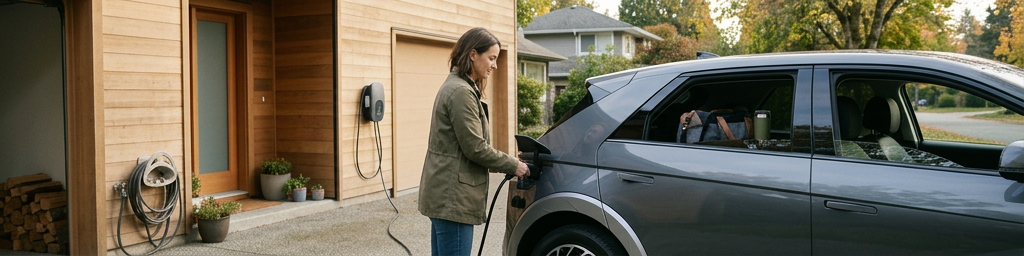
A wall‑mounted unit on its own circuit turns your parking spot into a personal refuelling bay. Once installed, everyday use is nearly effortless: park, connect the cable, and walk away. Most cars allow you to set a target charge level so the battery stops at a sensible percentage for daily use, reducing the time spent at the highest state of charge. Many home units and vehicles also support timers, letting you take advantage of cheaper overnight energy tariffs. Choosing a sensible power rating that fits your electrical panel, rather than the absolute maximum, usually provides all the speed you need while keeping installation simpler and more affordable.
Building safe and tidy habits
Small habits make home charging both safer and more pleasant. Keeping the cable off the ground reduces wear, tripping hazards, and contact with puddles or grit. Touching the plug and outlet occasionally after a while of charging helps spot problems; warm is normal, hot or discoloured is not. Avoiding multi‑way adaptors, daisy‑chained extension leads, or bargain‑bin accessories keeps the current flowing through equipment designed for long, steady loads. Once a routine is in place, these checks become almost invisible—part of the same muscle memory as putting the car in park and locking the doors.
Matching home power to real mileage
A helpful mental exercise is to work backwards from your weekly driving. Add up your usual commutes, school runs, and errands, then divide that distance by the hours your car sits at home plugged in. If that simple maths shows even a slow connection can replace what you use, there is little reason to rush into expensive changes. If you often arrive home with the battery low and need to leave again early, faster home power buys breathing room. Some families size their home setup to cover their busiest regular days rather than the average, so every hectic weekend or sports run still fits comfortably without an emergency dash to a roadside charger.
Using Public Infrastructure with Confidence
Types of public sites and what to expect
Public points broadly fall into two groups. Destination units, similar in speed to a typical home wall box, live in car parks, workplaces, gyms, and shopping centres. They are best for sessions measured in hours, not minutes, quietly adding meaningful range while you get on with other tasks. High‑power roadside units, often grouped at service areas or near major junctions, are built for quick sessions. They connect through different plugs designed for rapid energy transfer and are paired with clear screens or app interfaces showing status and pricing. As your battery fills, the rate generally tapers, so these stops are most efficient when you arrive with a lower state of charge and leave before aiming at a full pack.
Finding, starting, and finishing a session
Modern navigation systems and smartphone tools make locating public options straightforward. Maps can filter by plug type, power level, and availability, and some show live status for each connector. Once at a site, the basic steps are consistent: park within cable reach, open your car’s port, identify the right connector, authenticate through a card, fob, or app, then plug in. After a short handshake between car and station, charging begins. When you have enough range for the next leg, you stop the session on the screen or app, unplug, and return the cable to its holder. A quick check on the car’s display confirms that the doors have locked and charging has ended.
Managing costs and expectations
Because building and maintaining high‑power sites is expensive, rapid public sessions typically cost more per unit of energy than home power. Many drivers therefore lean on domestic charging for routine needs and see public use as a top‑up tool for trips or unusual weeks. Some networks offer subscriptions, loyalty pricing, or roaming deals that can be worthwhile if you use the same brand frequently. It is worth reading the tariff information on the screen or in the app before starting, as some locations adjust pricing based on time of day or power level. Tracking a month or two of use—home and public—gives a realistic picture of how your driving style and local tariffs combine.
Choosing the right public option for the moment
Different public sites shine in different situations. This comparison table can help match your need on the day with the most comfortable choice.
| Situation | Better suited option | Why it helps |
|---|---|---|
| Long highway leg, tight schedule | High‑power roadside unit | Large range boost during a short comfort break |
| Afternoon in town or at the office | Destination‑style car‑park unit | Adds plenty of range while you’re busy elsewhere |
| Staying overnight away from home | Hotel or residential unit | Wakes to a comfortably charged battery next day |
| Weekly errands, no home socket | Chargers at shops or leisure | Maintains range over several relaxed short visits |
Seeing these stops as part of meals, shopping, and rest breaks—rather than separate chores—keeps public use calm and predictable.
Q&A
-
How should I plan a basic home charging setup for everyday electric driving?
For daily use, a dedicated Level 2 charger on a suitable circuit is ideal. Ensure professional installation, set a regular overnight charging schedule, and use the car’s charge limits to protect long‑term battery health. -
When does it make sense to rely on public chargers instead of home charging?
Public chargers are best for long trips, apartment living without dedicated parking, or topping up quickly during errands. Use apps to check availability, pricing, and power levels before you arrive to avoid delays. -
How can I do effective battery range planning for my EV ownership routine?
Start by understanding your real‑world consumption in different conditions, then add a safety buffer. Plan frequent routes around reliable chargers and adjust expectations for weather, speed, and cargo that can reduce range. -
What role does charging connector awareness play in public charger use?
Knowing your vehicle’s connector types and adapter options prevents incompatible stops. Check each station’s plug standard and power rating in advance, especially when traveling across regions with different charging ecosystems. -
How can I build a simple, low‑stress EV ownership routine for everyday electric driving?
Align daily mileage with an overnight charging habit, avoid running the battery very low, and pre‑condition the car while plugged in. Regularly update navigation and charging apps so your routine adapts to new stations and patterns.