
Eating With Intention: Turning Hunger Cues Into a Calm, Sustainable Routine
Meals can easily become background noise: eaten while scrolling, rushing, or worrying, rather than noticing what’s on the plate or how it feels. By gently slowing down and paying closer attention, everyday eating can shift into a calmer, more satisfying part of daily life.
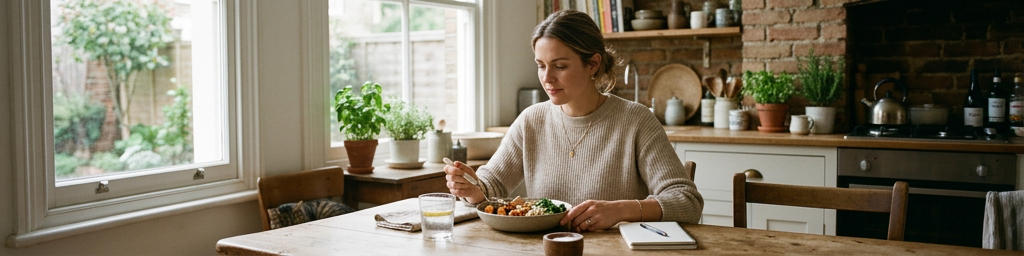
This story is part of Esgamesol's practical reading library across everyday topics.
Letting Your Body Lead the Meal
From “food rules” to kind curiosity
Many people grow up with tight labels: “good” foods, “bad” foods, “clean” days, “cheat” days. That mindset often fuels pressure, hidden rebellion, and swings between strict control and giving up. A more helpful approach is to turn down the noise of rules and turn up gentle curiosity. Instead of asking “Is this allowed?” the focus shifts to “How does this feel right now and a little later?” This outlook makes space for both nourishment and pleasure. It also softens guilt, because each meal becomes feedback, not a test. Over time, that kindness helps rebuild trust in your own signals instead of relying only on external plans or trends.
Tuning into hunger and comfort levels
Body signals can be faint at first, especially if eating has long been driven by schedules, apps, or emotion. Physical hunger often builds gradually: a hollow feeling in the stomach, lower focus, maybe a bit of irritability. Emotional urges usually arrive faster and feel more specific, like suddenly “needing” one exact snack. A simple check-in helps: “Where do I feel this?” Sensations in the stomach usually point to physical need; tension in the chest or jaw may point to mood. Comfort on the other side has ranges too. There is “just enough,” when attention drifts from food, and “too much,” with tightness or sleepiness. Learning to notice the shift from “still pleasantly hungry” to “satisfied for now” turns eating into a two-way conversation with your body.
Separating feelings from appetite—without shame
Eating to soothe emotions is deeply human. Food can bring comfort, distraction, celebration, or memories of safety. The aim is not to forbid that, but to add a little space around it. When a strong urge hits, especially between meals, try silently naming what is happening: “stressed,” “lonely,” “bored,” “celebrating.” Then ask, “Am I also physically hungry?” Sometimes the answer is yes, and a snack truly helps. Sometimes the body is actually asking for rest, connection, or a break from stimulation. Choosing food even after that reflection is still valid; the difference is that it becomes a conscious choice instead of an automatic reaction. With practice, the need to “numb out” with food often softens, replaced by a mix of emotional tools that feel more supportive.
Slowing the Pace: From Rushed Bites to Steady Nourishment
Tiny pauses that change the whole meal
Speed quietly shapes how much and how comfortably you eat. Signals between stomach and brain are not instant; they need a little time. When meals disappear in a blur, those signals arrive too late, and discomfort often follows. Building in tiny pauses can shift the experience without demanding long rituals. Before the first bite, take one slow breath and ask, “What do I want from this meal—comfort, energy, enjoyment, or all three?” Halfway through, pause again: “How is this feeling now?” Setting utensils down between bites, taking sips of water, or simply noticing three details—flavor, texture, temperature—naturally slows chewing. These moments add up to a rhythm where your body can speak and your mind can actually listen.
Creating an environment that supports slower eating
Where and how you eat can either speed you up or help you settle. Standing at the counter, eating in the car, or multitasking at a laptop pushes the body into “get it done” mode. Choosing one or two regular eating spots—a corner of the table, a favorite chair—signals to your brain that this is a moment to pause. Putting phones and other screens aside for even the first five or ten minutes reduces mindless grazing. Foods that require more chewing, like fresh fruit, crunchy vegetables, or whole grains, also support a calmer pace. They naturally stretch out meals, giving plenty of time for signals of satisfaction to appear. None of this has to be perfect; even one screen-free snack or one seated meal a day can start reshaping habits.
| Situation at mealtime | Helpful slow-down cue | Possible benefit (general) |
|---|---|---|
| Eating while working or scrolling | First ten bites with screens aside | More awareness of taste and comfort level |
| Grabbing food on the go | One full deep breath before the first mouthful | Slightly calmer choices and portions |
| Coming home extremely hungry | Small glass of water before plating food | Easier to serve a level that feels comfortable |
| Large social spread of options | Quick check-in halfway through the plate | Better sense of when enjoyment starts to dip |
Short, repeatable cues like these are often easier to keep than strict timing rules, and still gently nudge meals toward a more settled pace.
Building a Supportive Plate and Portions
A simple visual structure—not strict measuring
Balanced meals do not require scales or tracking apps. Visual guides are often enough. Many people find it useful to picture a plate in loose sections: a generous portion of colorful plants, a moderate serving of protein, and a smaller area for grains or starchy sides. Healthy fats tuck into the gaps. A hand can act as an easy reference: roughly two cupped hands of vegetables or fruit, a palm of protein, a fist of grains or starchy foods, and a thumb of added fats. These are flexible, not rules. The point is to create a base that keeps energy steadier, which in turn makes it easier to respond to appetite calmly instead of being yanked around by sudden crashes.
Snacks as quiet helpers instead of chaos
Between-meal bites can either calm the day or keep it bumpy. Reaching mostly for items that combine fiber, some protein, and a little fat tends to give more staying power than quick, very sugary or airy options. Think of things like fruit with nuts, yogurt with seeds, vegetables with a dip, or whole-grain toast with a spread. Portions can stay modest: enough to take the edge off and bridge to the next meal. Planning one or two likely snack times makes it easier to avoid the “suddenly starving” moment that often leads to hurried overeating later. Treating snacks as part of your overall pattern, rather than secret extras, helps remove shame and turns them into a calm tool for steady energy.
Gentle portion awareness without restriction
Being aware of how much lands on the plate can support comfort, but it does not have to become obsessive. One friendly approach is to start with slightly smaller portions while reminding yourself that seconds are always an option. This opens space to check in partway through instead of feeling locked into finishing everything. Serving food onto plates or into bowls, rather than eating from a large bag or carton, creates a natural end point where you can pause and decide. Over time, you begin to notice how different amounts feel in your body—what leaves you energized, what leaves you heavy, and what leaves you still thinking about food. Those observations guide future choices more effectively than any rigid serving chart.
Working With Emotions, Habits, and Social Life
Recognizing when feelings are driving the fork
Strong feelings often show up as “cravings,” especially after long, tense days. One small skill can make a big difference: naming what is happening. When you notice yourself drifting toward the kitchen, pause and ask, “What am I actually feeling?” If the word that comes up is “tired,” “stressed,” or “lonely,” you might experiment with a short non-food response first—stretching, stepping outside, or messaging someone. If the urge remains, you can still choose to eat, but now with clearer awareness. Over time, this habit loosens the tight loop between every emotion and an automatic snack, and you build a menu of responses that serve both body and mind.
Staying grounded when sharing food with others
Meals with friends, colleagues, or family carry extra layers: generous portions, shared dishes, and social expectations. Instead of aiming to be “perfect” in those settings, it can be more useful to carry one or two gentle anchors. For example: take a moment to scan hunger before the first plate; include at least one item that brings steady energy, like a protein or fiber-rich side; pause before going back for more to see whether you are chasing taste or chasing a feeling. Planning for enjoyment also matters. Intentionally choosing a dessert or favorite dish you truly want, then slowing down to savor it, often feels more satisfying than grazing through many items without really tasting them. This mindset reduces the swing between “I must avoid everything” and “I blew it, so nothing matters.”
| Common social scene | Simple personal anchor | Likely overall effect (non-precise) |
|---|---|---|
| Buffet or shared table spread | Fill part of the plate with fiber-rich items | More steady energy, easier to sense fullness |
| Long gathering with snacks | Make a small plate instead of constant nibbling | Clearer start and finish, less mindless grazing |
| Work event or catered meeting | Check hunger level before first serving | Better match between portions and actual appetite |
| Celebratory dessert | Choose one option to savor slowly | More satisfaction with less urge to overdo |
These anchors keep internal signals in the conversation, even when external cues are loud.
Turning Small Shifts Into a Lasting Routine
Designing a simple three-point check for meals
A tiny structure can make intention feel natural rather than forced. One helpful pattern: a brief pause before eating, a check halfway through, and a clear finish. Before starting, notice hunger and your mood. In the middle, ask how satisfaction and comfort are changing. At the end, send a signal that the meal is over—put utensils aside, cover leftovers, maybe take one steady breath. This three‑point check rarely takes more than a minute in total, yet it helps your body trust that its signals will be heard regularly. That sense of reliability often reduces swings between strict control and “all bets are off.”
Keeping changes realistic and kind
Habits stick best when they respect real life. Instead of trying to overhaul every meal, choose one or two small shifts that feel doable right now: maybe sitting down for breakfast, or putting your phone away for the first part of lunch, or preparing one balanced snack the night before. When that feels normal, layer in another step, like using hand-based portion cues or adding a vegetable or fruit to one meal a day. Expect some messy days; busy schedules, travel, or stress will sometimes pull you back to old patterns. Treat those days as information, not proof of failure. Asking “What made it hard today?” and “What helped yesterday?” keeps the process flexible. Over time, these quiet adjustments shape a routine where food supports your life instead of running it—a routine built on respect for your body’s signals, room for pleasure, and a pace that lets you actually enjoy what you eat.
Q&A
-
How can I improve my hunger cue awareness if I often eat on autopilot?
Start by pausing before each meal to rate your hunger from 1–10, then do the same midway and after eating, helping you distinguish true physical hunger from boredom or emotional triggers over time. -
What practical strategies support developing slow eating habits daily?
Set a minimum meal time (e.g., 15–20 minutes), put utensils down between bites, chew thoroughly, and avoid screens, giving your body time to send fullness signals and prevent overeating. -
How does portion balance support better energy and fewer cravings?
Building plates with a mix of protein, high-fiber carbs, healthy fats, and vegetables stabilizes blood sugar, keeps you fuller longer, and naturally reduces the urge for constant snacking. -
What steps help reduce emotional eating without relying on willpower alone?
Identify emotional triggers, create a non-food coping list (walking, journaling, calling a friend), and practice pausing before eating to ask what you really need emotionally in that moment. -
How can I build a sustainable nutrition routine with healthy food choices?
Plan simple repeatable meals, stock convenient healthy options, allow flexible treats, and focus on consistency over perfection, so your eating pattern fits your lifestyle long term.