
Build a Car Emergency Kit That Actually Works When You Need It
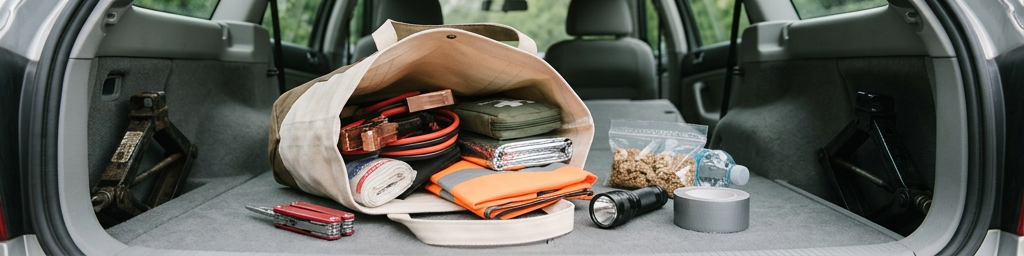
A quiet commute, a family road trip, even a quick grocery run can change quickly when a tire blows, a battery dies, or a storm rolls in. A thoughtfully packed trunk—tools, simple medical supplies, light, warmth, and water—turns an inconvenient delay into a manageable situation.
This story is part of Esgamesol's practical reading library across everyday topics.
What a Car Kit Is Really Trying to Do
Everyday problems, not movie-style disasters
Most roadside hassles are ordinary: a slow leak that becomes a flat, a drained battery after the dome light stayed on, a scraped knuckle while swapping a tire, traffic that stalls for hours. A compact kit is about shrinking those problems, not preparing for dramatic survival scenarios. The aim is simple: stay safe, stay visible, and stay reasonably comfortable until you can drive away or get professional help.
Thinking in plain categories keeps it from feeling overwhelming: gear that protects your body, items that help the car limp along, supplies that look after health, and basics that make long waits easier. Someone who mostly drives in busy suburbs might lean toward compact, multipurpose gear. A driver who often travels rural highways may want extra lighting, blankets, and water for longer waits between services. Either way, a focused selection beats a trunk stuffed with random, forgotten gadgets.
Adapting to your passengers and driving style
The “right” setup looks different for different drivers. A parent shuttling children may prioritise snacks, wipes, spare clothes, and a few small comforts to keep kids calm. Someone with a medical condition might keep a backup of key medication and a clear note explaining special needs. Pet owners benefit from a spare leash, collapsible bowl, and a bit of pet food.
Where and when you drive also shapes the kit. Late-night commuters and rideshare drivers often face dark lay‑bys and quiet car parks, so strong lighting and visibility gear become vital. People who take mountain or desert drives may lean harder on extra water, layers of clothing, and sun protection. Walking through your usual week—school run, office commute, weekend outings—quickly reveals what would help most if things unexpectedly stalled.
Be Seen, Be Safe: Lights, Signals, and Simple Gear
Making your stopped car obvious to others
Once you’re pulled over, your biggest risk often isn’t the original fault; it’s other drivers not noticing you in time. Hazard lights help, but they’re only the start. Foldable warning triangles or bright LED beacons placed well behind the vehicle create a clear corridor that tells approaching traffic to slow and shift lanes.
A high‑visibility vest is one of the smallest yet most powerful items you can pack. Slipping it on before stepping near traffic makes your outline stand out in headlights, rain, and dusk. In busy or fast‑moving traffic, that extra visibility can matter more than any tool in the box. Think of this gear as building an invisible fence of attention around you while you wait or work.
| Situation on the roadside | Helpful visibility choices | Best for which drivers |
|---|---|---|
| Stopped on a busy multi‑lane | Hazard lights, triangles, high‑vis vest | Commuters, rideshare, delivery drivers |
| Night-time on quiet rural road | LED beacons, bright torch, reflective vest | Long‑distance, rural travellers |
| Heavy rain or fog | Triangles, rear fog light (if fitted), extra lamp | Anyone in regions with frequent low visibility |
Even on bright days, reflective gear earns its place. Sun glare, curves, and distracted driving all reduce reaction time. Making your vehicle and your body as obvious as possible gives others a clearer chance to do the right thing.
Power and lighting that won’t let you down
A reliable torch is almost a second pair of hands. It helps you check tyres, read instructions, find dropped keys, or guide kids safely around the car. Headlamps are particularly handy because they keep both hands free for tools. Whichever style you choose, test it occasionally and keep spare batteries in a small, labelled bag so they’re easy to find in the dark.
Battery support goes beyond lighting. Jumper cables or a compact jump pack can turn a flat battery from a stranded situation into a short delay. A power bank dedicated to charging phones keeps navigation and calls working even if the car’s electrical system is misbehaving. In more remote areas, that can be the difference between a quick call for help and a long, uncertain walk for reception.
Simple Fixes: Tools and Tricks That Actually Help
Tyres, leaks, and other frequent annoyances
Tyre problems are some of the most common roadside issues. Start by confirming you have a usable spare, a jack that works with your vehicle, and a lug wrench that fits every wheel nut. Practising a tyre change once on a calm day at home builds confidence and helps you discover any missing pieces before they matter.
A basic pressure gauge lets you check numbers instead of guessing by eye, which can prevent damage from running tyres too soft. A small inflator that runs from the car’s power socket and a can of temporary sealant can sometimes get you safely to a garage rather than waiting for recovery. Add a pair of sturdy gloves so you can handle wheels, hot metal, and dirty surfaces without worrying about scraped hands.
Multipurpose tools for small, fix‑and‑go jobs
Not every problem justifies a tow. A tiny tool roll with screwdrivers, pliers, and an adjustable spanner can tighten a loose battery terminal, snug up a rattling bracket, or remove a bit of trim that has come loose and is scraping the road. Duct tape, electrical tape, and a handful of zip ties are classic problem‑solvers, able to hold a loose bumper corner, secure a hanging number plate, or tame flapping plastic undertrays for the journey to a workshop.
It’s useful to decide ahead of time which tasks you’re comfortable attempting. Straightforward jobs on stable ground—like swapping a wheel or reseating a loose bit of plastic—are realistic for many drivers. Anything involving fuel, strong burning smells, steering or braking faults, or working too close to fast‑moving traffic is a clear cue to step back, mark the area with warning gear, and wait for professional help.
Seasons, Storage, and Keeping Your Kit Ready
Adjusting to heat, cold, and changeable skies
Weather shapes what matters most. In colder conditions, extra warmth and traction are critical. Add thicker blankets, hats, gloves, and warm socks, along with an ice scraper and small brush. A bag of sand or similar grit can help tyres bite into ice or packed snow when they would otherwise spin uselessly. Longer winter nights also mean visibility equipment earns even more importance.
In hotter months, your focus shifts to keeping cool and shaded. Windshield sunshades, a light hat, breathable long sleeves, and extra water all help. Choose snacks that won’t melt into a mess in a warm boot. In regions known for heavy rain or sudden storms, keep a decent rain jacket, waterproof footwear, and a microfibre cloth for clearing misted windows. A small hand‑crank or battery radio can be handy in places where mobile reception fades during rough weather.
Organising, rotating, and involving other drivers
Loose gear rolling around the boot is hard to find when you’re flustered. Using a sturdy crate or soft organiser keeps most items together, while small pouches or labelled bags divide tools, medical supplies, and comfort items. Store priority gear—torch, vest, warning triangle—where you can reach it quickly without emptying everything else.
Every few months, give the kit a quick “service”: check food, water, and medicines, test lights and power banks, confirm your spare still holds air, and swap seasonal items as temperatures change. If several people share the car, walk each of them through where things live and what they’re for. When a real breakdown happens, having more than one person who knows the layout can save precious minutes and a lot of stress.
Taken together, these small steps turn a simple box of odds and ends into something far more valuable: a quiet, reliable backup plan that follows you wherever you drive.
Q&A
-
What should be included in a basic roadside safety preparation kit for everyday driving?
A solid kit includes reflective triangles, high‑vis vest, flashlight, multi‑tool, tire gauge, portable inflator, basic first‑aid kit, phone charger, water, and a paper list of emergency contacts and insurance details. -
How can I safely provide first aid in a vehicle after a minor collision?
First ensure the scene is safe and move off the roadway if possible, then check responsiveness, control visible bleeding, avoid moving the neck or spine, call emergency services, and keep the person warm and reassured until help arrives. -
What are the key jumper cable basics every driver should know before using them?
Know battery location and polarity, connect positive to positive first, then negative to a metal ground on the dead car, never let clamps touch, start the good car first, remove cables in reverse order, and wear eye protection if possible. -
How should seasonal travel readiness differ between summer and winter driving?
Summer prep focuses on coolant, AC, sun protection, and extra water, while winter prep adds snow brush, shovel, blankets, traction aids, de‑icer, full fuel tank strategy, and checking battery health and tire choice for cold conditions. -
What practical driver preparedness steps help during an unexpected breakdown on a busy road?
Signal and pull over safely, turn on hazard lights, position triangles, have a charged phone, stay inside with doors locked if unsafe outside, call roadside assistance, share precise location, and document the situation with photos if safe.