
Understanding Tire Pressure Monitoring Systems and Warning Lights
Tire Pressure Monitoring Systems help you spot low car tire pressure early so you can respond before handling or wear become a problem. Learn how direct and indirect TPMS work, how to read the warning light, and how to use charts and gauges to keep pressure in the correct range.
This story is part of Esgamesol's practical reading library across everyday topics.
What a Tire Pressure Monitoring System Does
A Tire Pressure Monitoring System, or TPMS, watches your car tire pressure while you drive. Sensors measure the air inside each tire and send the readings to the vehicle’s control unit. When one or more tires are noticeably below the recommended tire pressure for that vehicle, the system turns on a tire pressure warning light on the dashboard. By alerting you early to low pressure, TPMS helps you avoid driving long distances on under‑inflated tires, which can hurt handling and speed up wear.
TPMS is not a replacement for regular tire pressure checks, but it adds automated monitoring to the car’s safety features. It is designed to flag pressure that has dropped enough to be a concern, not to confirm that every tire is always at the exact correct pressure. Drivers still need to use a gauge and follow the vehicle’s tire pressure chart or owner’s manual to set and maintain proper inflation. When the warning light comes on, it is a signal to stop, inspect the tires, adjust the pressure, and check for damage.
Types of TPMS and How They Work
Modern Tire Pressure Monitoring Systems fall into two main categories: direct and indirect. A direct system uses pressure sensors mounted inside each wheel, usually on the valve stem, to measure air pressure and often temperature in real time. These sensors send data wirelessly to the car’s control unit, which compares each reading with the recommended tire pressure. If a tire drops below the target level, the system turns on a warning icon so the driver knows to check car tire pressure with a reliable gauge and adjust it to the correct range.
An indirect Tire Pressure Monitoring System does not measure air pressure directly. It relies on wheel speed sensors from the anti-lock braking system. When one tire loses air, its rolling radius changes, so it spins at a different speed than the others. The control unit interprets this as possible underinflation and triggers a warning. Indirect designs are simpler and cheaper, but they cannot show the exact pressure in each tire and may react slowly to gradual losses. Both types can be affected by sensor faults, low battery power in the valve units, or driver misuse, so TPMS should support, not replace, routine checks with a manual gauge.
| TPMS type | How it determines low pressure | Typical advantages | Typical limitations |
|---|---|---|---|
| Direct TPMS | Reads air pressure in each tire | Shows per‑tire values | Relies on valve sensors and batteries |
| Indirect TPMS | Compares wheel speed patterns | Simpler system design | Cannot display exact pressure |
| Direct TPMS | Compares readings to recommended range | Faster response to sudden loss | Sensor damage can mute alerts |
| Indirect TPMS | Detects changes in rolling radius | Lower installation complexity | May react slowly to gradual leaks |
Direct TPMS versus Indirect TPMS
A Tire Pressure Monitoring System can be either direct or indirect, and knowing which type your car uses explains how tire pressure checks and warning lights behave. Direct TPMS relies on sensors inside each wheel that send the actual tire pressure, and often the temperature, to the vehicle so the system can warn you when a specific tire drops below the target level. Indirect TPMS does not read air pressure; it uses wheel speed or ABS data to infer a pressure loss from changes in rotation, so it detects relative differences rather than an exact value. Because indirect systems cannot show true readings, you still need to confirm pressure with a gauge and adjust it to the recommended setting.
Understanding Recommended Tire Pressure
Manufacturers specify a recommended tire pressure so each tire supports the vehicle safely and performs as intended. This recommended value, often called the correct tire pressure, is based on the car’s weight distribution, suspension design, and typical driving conditions. You can usually find the recommended car tire pressure on a label inside the driver’s door, on the fuel filler flap, or in the owner’s manual. These values are set for cold tires, meaning the car has been parked for several hours and the tires have not recently been driven at speed.
General tire pressure charts provide background information, showing typical pressures for common tire sizes and types of vehicles. However, they cannot reflect the exact load, axle weight, or tire model of a specific car. For everyday driving, the numbers printed on your vehicle’s label are the main reference for correct tire pressure, while any tire pressure chart or online overview should be treated as a broad comparison tool rather than a replacement for the manufacturer’s specifications.
Passenger load, cargo weight, and ambient temperature all influence which pressure is most suitable for a trip. Some manufacturers list higher recommended values for fully loaded vehicles to help the tires carry extra weight. Pressure also rises as the air inside the tire warms up during driving and falls in colder weather. For an accurate tire pressure check, measure pressures when the tires are cold and adjust them toward the recommended values, following any guidance for heavier loads or special operating conditions.
Using Tire Pressure Charts Safely
A tire pressure chart can help you understand typical pressure ranges by tire size or load, but it should never replace the vehicle maker’s recommended tire pressure. For everyday driving, the correct tire pressure is set by your specific car, usual load, and speed, so always start with the figures on the driver’s door placard or in the owner’s manual and treat any chart as a supporting reference.
If a chart suggests a different value from the vehicle label, follow the manufacturer’s recommended tire pressure unless a qualified professional tells you otherwise. Charts are designed for broad conditions and often show ranges, so use them mainly to see how pressure changes with load or performance. When in doubt, stay with the specified setting from the car maker and rely on the chart only to clarify how those choices affect safety, comfort, and tire life.
Practical Tire Pressure Checks and Adjustments
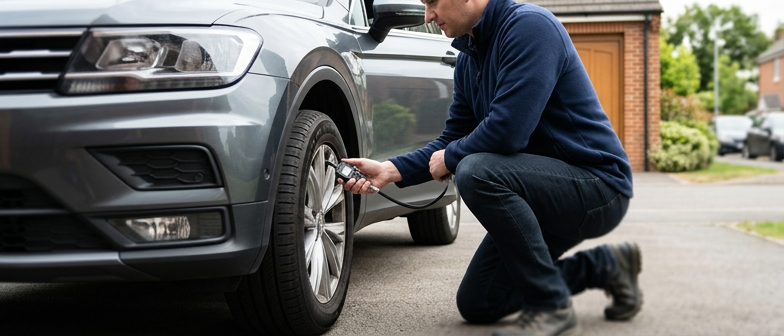
A practical tire pressure check starts with knowing the correct tire pressure for your vehicle. This recommended tire pressure is shown on a label in the driver’s door frame or in the owner’s manual and differs from the maximum value on the tire sidewall. For an accurate tire pressure check, measure car tire pressure when the tires are cold, after the vehicle has been parked for several hours. Remove the valve cap, press a reliable gauge firmly onto the valve, and note the reading for each tire, including the spare if fitted.
Compare your readings with the recommended tire pressure for your vehicle. If a tire is below the guideline, add air in small amounts and recheck until you reach the proper level. If a tire is overinflated, release air gradually and test again. Aim for similar pressures across the same axle to keep handling predictable. A simple tire pressure chart from the manufacturer or owner’s manual helps you quickly see whether each tire is within its ideal range, especially when carrying heavier loads or driving at sustained higher speeds.
Your Tire Pressure Monitoring System supports these manual checks by giving real-time alerts but does not replace routine maintenance. When the tire pressure warning light illuminates, stop safely and use a gauge to confirm which tire is out of range instead of guessing. Restore each tire to the correct pressure and drive briefly so the system can update and turn off the warning light once values are back within the expected limits. Combining regular manual checks with TPMS feedback keeps car tire pressure in a safe working range and reduces unexpected issues on the road.
Q&A
-
What does a Tire Pressure Monitoring System actually do while I drive?
A TPMS tracks the air pressure in your tires using sensors and alerts you with a warning light if any tire drops noticeably below the recommended level set for your vehicle. -
How can I find the recommended tire pressure for my car?
Look for a label on the driver’s door frame, fuel filler flap, or in the owner’s manual; these values show the correct cold tire pressure for your specific car and tire size. -
What is the difference between direct and indirect TPMS?
Direct TPMS uses pressure sensors inside each wheel to send exact readings, while indirect TPMS estimates a pressure loss from wheel speed or ABS data and cannot show true pressure values. -
How should I properly check car tire pressure at home?
Check pressure when the tires are cold, remove each valve cap, press a reliable gauge onto the valve, compare the reading with the car’s recommended value, and adjust the air as needed. -
Does a general tire pressure chart replace my car’s settings?
No. A tire pressure chart is only a broad guide; you should always follow the vehicle manufacturer’s recommended tire pressure for everyday driving and use charts as secondary information.