
Turning Everyday Meals into Nutrition Lessons the Whole Family Shares
Weeknight dinners, rushed breakfasts, and after-school snacks can quietly shape how children think about food for years to come. When families turn everyday moments into simple conversations, small choices, and repeatable routines, kids gain skills and confidence that support better food decisions long after childhood.
This story is part of Esgamesol's practical reading library across everyday topics.
Everyday Food Moments That Quietly Teach
Small actions that send big messages
Children watch far more than they listen. The tone adults use, the foods they serve, and what they put on their own plates all become silent lessons. Filling half a plate with colorful produce, choosing water at the table, or adding a spoonful of beans and whole grains shows balance without any lecture. Short comments like “This helps my body feel calmer” or “This keeps me full for longer” gently link food to how the body works. Over time, these tiny phrases and repeated patterns sink in and become part of how children judge their own choices.
Turning simple dishes into “how my body works” stories
Common meals can become quick stories about what food does inside the body. A sandwich can highlight grains in the bread, protein in the filling, and crunchy vegetables that help digestion. Stir-fries can become games about plant parts: roots, leaves, stems, and seeds. Younger children enjoy hearing that “these orange bites help your eyes” or “these greens help your tummy.” Older ones might like extra details about steady energy or focus. The key is to stay light and curious rather than technical, so food feels interesting instead of strict.
Letting kids see and touch variety
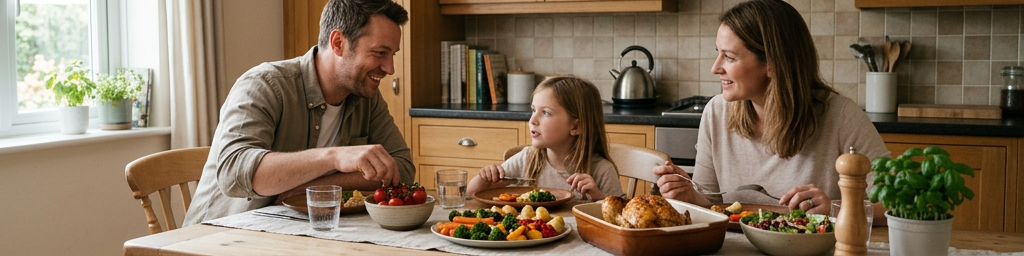
Placing dishes in the centre of the table and letting children see all the options shows that meals are made of many parts. Small servings of different colors, textures, and food groups send a quiet message about variety. Letting children serve themselves, or at least point to what they want, builds trust and gives them a sense of control. When new foods appear in tiny amounts beside familiar favourites, they look like normal parts of the meal rather than challenges to “get through.” Repeating this style most days makes balance feel ordinary.
Child-Friendly Habits Around Meals and Snacks
Respectful guidance instead of pressure
Children usually respond better to calm structure than to strict rules. Adults can decide what food is offered and when, while children decide which foods to eat and how much feels right. This shared role approach protects natural hunger and fullness signals. Repeated, gentle exposure is important: many kids need several tries before accepting something new. Phrases like “You can taste it if you’d like” keep the mood relaxed. When meals are not tests to pass or fail, children are more likely to explore.
Snack routines that refill, not replace
The time after school often sets the tone for the rest of the day’s eating. Seeing snacks as “mini meals” can help. Pairing something with protein or healthy fats with something rich in carbohydrates brings steadier energy: fruit with yogurt, crackers with cheese, or carrot sticks with hummus. A regular snack time, plus a short list of options, keeps things predictable. Calm questions such as “Is your tummy hungry or are you bored?” teach children to check in with their bodies before eating just for entertainment.
Setting up the home for easier choices
What children see first is usually what they choose. Keeping washed fruit, chopped vegetables, and simple wholegrain options at eye level in the fridge or cupboard nudges choices in a helpful direction. Treat-style foods do not have to disappear, but moving them out of direct sight lowers the constant pull. Water within easy reach makes it more likely to be chosen over sugary drinks. The environment quietly does part of the teaching, so adults do not need to correct every single choice with words.
| Home routine tweak | Likely effect on children | Best for families who… |
|---|---|---|
| Keep cut fruit on the table before dinner | More automatic fruit snacking while waiting | Want less “I’m starving!” drama before meals |
| Offer two snack options, both balanced | Fewer battles over “only chips” requests | Prefer structure but still value choice |
| Store sweets out of sight, not banned | Less focus on treats, calmer requests | Want to reduce cravings without strict rules |
This kind of setup turns the kitchen into a quiet coach, supporting decisions even when adults are busy.
Cooking, Play, and Shared Routines
Involving kids in the kitchen
Helping in the kitchen builds skills and curiosity at the same time. Younger children can wash produce, tear salad leaves, stir batter, or sprinkle toppings. Older ones can measure ingredients, crack eggs with guidance, or read short recipe steps aloud. As they work, simple comments about texture, colour, and role—“These beans help keep us full,” “Roasting makes these vegetables sweeter”—turn cooking into a relaxed learning space. Children are often more willing to taste food they helped create, even if it contains something once refused.
Games and stories that explore where food comes from
Playful activities make food systems easier to grasp. A child can pretend to run a shop, sort toy or real produce by colour or type, or play café with a menu that includes fruit, vegetables, grains, and protein-rich foods. Short stories about how an apple travels from tree to table or how seeds become carrots give a sense of the journey behind each bite. Drawing a “rainbow plate” or building one out of real food turns grouping foods into a game instead of a lecture.
Weekly traditions that make skills stick
Light, repeatable rituals often teach more than one-off talks. A weekly “new food night,” a “colour of the week” at dinner, or a regular shared job like laying out vegetable sticks before the main dish all build structure. When these traditions stay playful rather than competitive, children join in without fear of doing it “wrong.” Over time, planning simple meals, writing short shopping lists together, and cleaning up as a team builds confidence and a sense that eating well is a normal family project.
| Simple family ritual | What children practice | Possible twist |
|---|---|---|
| “New food Friday” | Tasting tiny portions without pressure | Let kids rate foods with funny faces |
| Build-your-own bowl night | Mixing proteins, grains, and vegetables | Rotate themes: wraps, tacos, salads |
| Ingredient of the week | Seeing the same food in different dishes | Let kids choose the next ingredient |
These small rituals create memories and skills children can carry into their own homes later.
Linking Food to Feelings, Energy, and Daily Life
Helping kids notice how food feels
Children are strongly motivated by how they feel right now. Pointing out patterns—“You had a steady breakfast and played for ages without getting shaky”—connects food to energy, mood, and focus. After a very sugary snack, a gentle question like “How does your body feel now?” invites reflection instead of shame. Over time, kids begin to notice which choices help them play longer, think more clearly, or sleep more soundly.
Calmer mealtimes and mindful eating
A peaceful setting often matters as much as the menu. Sitting together when possible, turning off screens, and allowing enough time for slower eaters encourage children to chew, taste, and notice fullness. Neutral comments about flavours and textures—“This is really crunchy,” “The sauce is tangy”—keep talk away from judgment. When children are trusted to stop when they feel done, even if there is still food on the plate, they learn that their body’s signals are respected.
Bedtime snacks and a sense of safety
Evening hunger can come from real need, habit, or emotion. Having a simple household guideline—such as one small, steady snack if there is a long gap after dinner—keeps things predictable. Options might focus on familiar, calming foods rather than sugary ones. If a child asks for food close to bedtime, a short chat about feelings, plus a consistent offer like fruit or toast, separates comfort from constant grazing. Knowing that another meal will always come helps children feel secure around food.
Shared Responsibility That Lasts Beyond Childhood
Clear roles that reduce battles
When adults take charge of what is offered and when, and children handle how much to eat from what is there, many daily arguments fade. This pattern respects real hunger while still protecting overall balance. Refused foods can simply appear again another day in a new form instead of becoming power struggles. Children learn that variety will keep showing up, and that nothing terrible happens if they skip something once.
Building lifelong confidence with food
As children grow, the goal is not perfection but trust: trust in their body’s signals, trust that food will be there regularly, and trust that all foods can have a place. Packing a lunch that includes produce, a grain, protein, and a small treat demonstrates this mix in a real-life way. Casual “thinking aloud” about these choices gives a simple model they can later use for their own snacks and meals away from home.
Shared routines around shopping, cooking, eating, and cleaning slowly turn everyday meals into steady lessons. Across lunchboxes, after-school snacks, quick breakfasts, and family dinners, the same gentle message repeats: food is there to support growth, energy, and enjoyment, not to create fear. With time, those small, repeated choices and conversations shape habits that can stay with children long after they leave the family table.
Q&A
-
How can Healthy Eating Education be introduced without overwhelming children?
Start with one simple idea at a time, like “colorful plates,” using stories, visuals, and short activities. Repeat in daily routines—meals, shopping, cooking—so concepts become habits, not lectures. -
What are effective strategies for building Child-Friendly Eating Habits?
Offer predictable meal and snack times, give two or three healthy choices, use child-sized plates, avoid pressure or bribing with food, and model curious eating by trying new foods together. -
How can parents master Balanced Snack Planning for busy weekdays?
Use a quick formula: fruit or veg + protein or healthy fat + whole grain. Prep grab-and-go options on weekends, store them at kids’ eye level, and keep “sometimes snacks” less visible. -
Why are Shared Cooking Activities so powerful for long-term healthy habits?
Hands-on cooking builds food familiarity, skills, and confidence. Kids who help wash, mix, and taste are more willing to try new foods and understand where meals come from, not just packages. -
How does Home Wellness Education provide Practical Dietary Guidance for families?
It turns nutrition into daily rituals: planning menus, reading labels, setting screen-free meals, and reflecting on hunger and fullness. Small, repeated actions guide behavior more than one-time advice.