
Keep Your Car Starting Strong: Simple Battery Care for Everyday Driving
That first turn of the key each morning depends on more than luck. How you treat the power source under the hood quietly shapes every commute, errand, and road trip. A few simple habits can reveal early trouble, stretch service life, and keep everyday driving stress‑free.
This story is part of Esgamesol's practical reading library across everyday topics.
Daily habits that make starting smoother
Give the battery an easier job each time you start
Starting the engine is one of the hardest tasks for the battery, especially on cold mornings or after the car has been sitting. Before you twist the key or press the button, switch off high‑draw items like heated seats, rear defogger, and powerful audio. With fewer accessories demanding power, more of the battery’s energy goes straight to the starter motor, which helps the engine turn over more quickly and with less strain. Once the engine is running smoothly, bring those comforts back on one by one. This tiny routine change takes only a second, but it reduces the shock your battery experiences at every start, especially in stop‑and‑go city use.
Plan your journeys to avoid constant short hops
Many short trips feel convenient, but from the battery’s point of view they are costly. Each start draws a large burst of power, and a two‑minute drive rarely gives the charging system enough time to replace what was used. Over a week of quick errands and school runs, the battery can quietly sink into a low‑charge state. Whenever possible, combine several errands into a single outing, or add a slightly longer leg to your route so the engine runs for more than a few minutes. A relaxed drive at steady speed is far more helpful than idling in a driveway. Think in terms of “fewer starts, slightly longer runs” to give your battery a chance to recover.
Cut silent drains when the engine is off
Modern cabins are full of lights, screens, and gadgets that can slowly nibble away at stored power. Before walking away from the car, take a quick look around: are dome lights still glowing, is the infotainment system quietly awake, is anything plugged into a power socket? Some outlets stay live even with the ignition off, allowing coolers, chargers, or dash cameras to drain the battery overnight. Make it a habit to unplug accessories, close doors and the trunk firmly, and check that the interior is dark. These tiny checks prevent the common surprise of a flat battery after “doing nothing” more than parking for the evening.
Keeping connections clean and healthy
Why corrosion and loose clamps matter
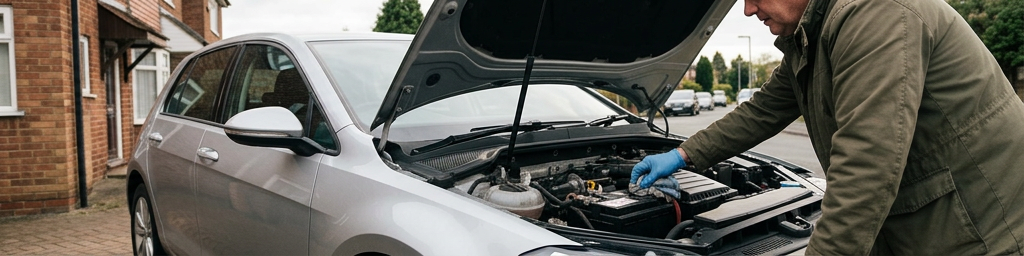
Even a strong, fully charged battery cannot do its job if power struggles to flow through dirty or loose connections. The metal posts and clamps can build up a white or greenish crust over time, especially in damp or salty environments. That crust adds resistance, forcing the battery to work harder and sometimes causing slow cranking, flickering lights, or random resets in electronics. Loose clamps can briefly break contact while driving, leading to mysterious warning lights or a sudden loss of radio presets. A quick glance under the hood now and then to check that terminals look clean, dry, and firmly held in place catches many of these problems long before they leave you stranded.
Light cleaning at home and when to ask for help
A thin film of dust on the battery case is normal, but heavy buildup around the posts deserves attention. With the engine off and keys out, you can gently wipe the top of the case with a damp cloth to remove dirt and moisture that might encourage corrosion. If you see thicker deposits on the terminals, a simple mixture of water and baking soda can help loosen it, though eye and hand protection are wise. For heavy corrosion, cracked cases, swelling, or signs of leakage, it is safer to let a repair shop handle cleaning and inspection. They can disconnect the cables, clean the contact surfaces properly, apply protective coatings, and confirm the battery is still structurally sound and charging correctly.
| Situation around the battery area | What it might suggest | Sensible next step |
|---|---|---|
| Light dust, firm clamps, no discoloration | Connections likely healthy | Keep checking occasionally during regular fluid checks |
| Fluffy white or green buildup on posts | Corrosion increasing resistance | Arrange cleaning during your next service visit |
| Swollen case, cracks, or wet patches | Possible internal damage or leakage | Avoid touching and seek professional inspection soon |
| Terminals that wiggle by hand | Poor contact that can mimic failure | Have clamps tightened and checked for wear |
Not every odd sight means disaster, but spotting these changes early lets you choose a calm, scheduled visit rather than waiting for a no‑start emergency.
Spotting quiet early warnings
Subtle changes in cranking and lights
Most batteries do not fail all at once; they fade gradually. One of the first hints is a slower, lazier cranking sound when you start the car, especially after it has sat overnight. The engine may still fire, but it feels like it takes more effort. At the same time, you might notice dash lights dimming more than usual while the starter is turning, or headlights that briefly lose brightness. On cold days, this can be easy to blame on the weather, yet a healthy system still turns the engine with confidence. Treat any change you can feel or see—however small—as useful information instead of background noise.
Electrical quirks that point to trouble
Batteries and charging systems also send their warnings through cabin electronics. Power windows that creep instead of glide, a blower fan that seems weaker at idle, a sound system that randomly cuts out or resets, or a central screen that restarts without reason can all signal that voltage is dipping under load. A dedicated battery or charging warning light, if it appears and stays on while driving, is another quiet alert that the electrical system is under strain. These symptoms do not always mean the battery alone is at fault, but they do mean the whole system deserves a test—ideally before the next frosty morning or long journey.
Driving patterns, storage, and climate
Short trips, sitting still, and weather extremes
Every vehicle’s electrical heart lives between two stressful extremes: being used constantly for very short hops, or being left unused for many days. Frequent brief drives drain power at each start and rarely give the charging system time to refill. On the other hand, a car that sits untouched still has tiny background draws that slowly flatten the battery. Cold snaps make the internal chemistry slower and the engine harder to turn, while heat can age components more quickly. If your routine involves lots of short city drives, consider adding an occasional longer outing. If a car will sit for weeks, arrange a proper drive now and then, or consider gentle charging support designed for parked vehicles.
Simple preparation before longer parking breaks
When you know a vehicle will not move for a while—during a work trip, a season change, or when using a second car more often—a little planning protects the battery. Make sure lights and accessories are fully off, doors and the trunk are properly shut, and the battery is in decent condition before parking it. If possible, choose a sheltered spot that avoids extreme cold, direct sun, or standing water. Some owners ask a friend to take the car for a short drive occasionally, allowing the battery to recharge and fluids to circulate. The goal is to avoid repeated deep discharge, which shortens lifespan and makes future starts less dependable even after a successful jump.
| Parking and use pattern | Likely impact on battery | Helpful habit to adopt |
|---|---|---|
| Many very short city trips | Gradual under‑charging | Combine errands into fewer, slightly longer drives |
| Car mostly parked for long stretches | Slow drain from background systems | Arrange occasional proper drives or gentle charging |
| Outdoor parking in harsh seasons | Faster wear and more corrosion | Check terminals more often and clean when needed |
| Regular mixed driving with occasional highway runs | More balanced use | Keep current habits and watch for subtle warning signs |
Thinking about your own pattern in this way helps you choose which small changes will make the biggest difference for your situation.
When to ask for a test or replacement
Turning early clues into a clear decision
No battery lasts forever, even with perfect care. Once early signs start appearing—sluggish cranking, dimming lights, or repeated jump‑starts—it is wise to move from guessing to measuring. A workshop can perform a quick test that checks how the battery holds voltage under load and how well the charging system is supporting it. Age matters too: once a battery has served for several years, asking for a test during a routine visit is sensible, even if starts still feel mostly normal. If the test shows the battery is only just meeting basic levels, replacing it on your schedule is kinder to both your nerves and the car than waiting for a total failure.
Choosing a suitable replacement and setting it up for success
If testing confirms that the battery is tired, choosing a replacement that matches the vehicle’s needs pays off. The correct size and type ensures it fits the tray securely and connects properly to the existing cables. For cars loaded with powered features or used in tough climates, a battery with appropriate capacity often provides more consistent performance. Professional installation helps too: clamps tightened correctly, the unit firmly secured, and any covers or shields refitted. Once in place, all the earlier habits—clean connections, sensible power use, thoughtful driving patterns—continue to support the new battery, turning confident starts into an everyday expectation rather than a pleasant surprise.
Q&A
-
How does Cold Weather Start Support actually help my car in freezing temperatures?
Cold Weather Start Support focuses on battery health, proper oil viscosity and fuel system readiness so the starter motor turns freely, voltage doesn’t sag, and the engine fires quickly even when temperatures drop well below freezing. -
Why is Battery Terminal Cleaning critical for Reliable Engine Starting?
Dirty or corroded terminals increase electrical resistance, wasting power before it reaches the starter. Regular Battery Terminal Cleaning restores solid contact, ensuring maximum cranking power and more reliable starts in all conditions. -
What should a proper Vehicle Power Check include for Everyday Car Care?
A solid Vehicle Power Check covers battery state of charge, alternator output, starter draw and inspection of main cables and grounds, helping spot weak links early and avoid sudden no-start situations in daily use. -
How does Preventive Auto Maintenance reduce cold-weather starting issues long term?
Preventive Auto Maintenance schedules timely battery replacement, charging-system tests, fluid changes and ignition inspections, reducing the chance that cold snaps expose hidden weaknesses and leave you stranded with a dead engine. -
How can I integrate Everyday Car Care into a simple seasonal routine?
Align Everyday Car Care with seasons: before winter, clean terminals, run a Vehicle Power Check and inspect belts; before summer, recheck charging performance and fluids, building year-round reliability into your driving habits.