
Everyday Interior Care for a Fresher, More Comfortable Family Car
Crumbs in the footwells, smudged windows, and scattered toys can quietly turn even short trips into something stressful. A simple, steady approach to tidying surfaces, managing small messes, and refreshing the air can keep everyday journeys calmer, healthier, and more pleasant for everyone.
This story is part of Esgamesol's practical reading library across everyday topics.
1. Start With What You See And Touch
High‑contact spots that change how the cabin feels
The areas you touch constantly set the mood for every drive: steering wheel, gear selector, door pulls, buttons, and the main controls around the driver. When these feel sticky or dusty, the whole space seems neglected, even if the floors are fairly clean. Keeping a soft microfiber cloth in a door pocket or console makes it easy to wipe away dust and fingerprints whenever you have a spare minute. Light, frequent cleaning is kinder to plastics than hard scrubbing after grime has built up. Spraying cleaner directly onto the cloth, not the dashboard, stops products from seeping into switches or creating shiny, greasy patches that attract even more dust.
Screens, glass, and that “first glance” impression
Smears on touchscreens and streaky glass are distracting, especially in bright sun or at night. A clean, dry microfiber cloth is usually enough for most fingerprints; for tougher marks, use a screen‑safe product and wipe gently in straight lines rather than circles. Avoid paper towels, which can leave tiny scratches over time. Inside windows benefit from occasional attention too: a simple glass cleaner used on the cloth, then wiped from side to side, helps remove haze from children’s handprints or air‑conditioning film. Finishing with a quick check around the driver’s area—looking for crumbs on the seats, sticky marks on the console, or obvious clutter—turns leaving the vehicle into a tiny reset moment that keeps mess from snowballing.
Gentle tools for awkward corners and dusty trim
Vents, textured plastics, and narrow gaps around buttons collect fine dust that cloths often miss. A soft detailing brush or clean makeup/paint brush can loosen debris without scratching, especially around vent slats and badge lines. Follow with a vacuum or microfiber cloth to pick up what you’ve moved. Cup holders and small trays deserve regular attention too, because they often hide dried drink rings or melted snack residue. Removing rubber inserts and washing them with mild soap makes cleaning much easier; for fixed holders, a cloth wrapped around a finger can reach into tight edges. A few minutes on these small details transforms the overall impression from “used and grimy” to “lived‑in but cared for.”
2. Looking After Seats, Fabrics, And Floors
Light, regular cleaning that protects comfort
Soft materials carry most of the everyday dirt that comes into a family vehicle. Grit, crumbs, pet hair, and bits of leaves slowly work their way into cushions and padding, affecting both how things look and how they smell. A small handheld vacuum with a crevice tool is usually enough for weekly care. Run it along seams, between the seat base and back, and under booster or child seats, where snacks tend to disappear. Pulling mats out and shaking them before vacuuming protects the original carpet from wear. Rubber liners can be rinsed and air‑dried, which stops mud and sand from being ground into the floor. These modest habits keep the cabin feeling softer underfoot and more comfortable on longer journeys.
Dealing with spills on cloth and leather‑style materials
Spills are inevitable, especially with children or drinks on the go. The first step is always to blot, not scrub. Press a clean cloth onto the liquid to draw it up, repeating with fresh sections until it stops transferring. A small spray bottle with water and a touch of mild detergent can then be applied to a cloth and dabbed onto the area to loosen remaining residue. Leave doors open briefly in a safe place so the fabric can dry fully, reducing any chance of lingering smells. For leather and similar finishes, use a barely damp cloth and a dedicated cleaner when needed, followed by a light conditioner; too much water or harsh household products can damage coatings and cause cracking. Testing any new product on a hidden patch first is a smart precaution.
Under‑seat zones and floor areas that quietly collect grime
Spaces beneath and between seats swallow toys, crayons, crumbs, and receipts. Sliding seats forward and backward once a month reveals what has settled there. A narrow vacuum nozzle can then pick up debris around rails and mounting points, reducing the chance of loose objects rolling under pedals or rattling during drives. Salty marks from wet shoes or dried mud can be loosened with a small brush before vacuuming. Encouraging everyone to knock excess dirt from shoes before getting in has a surprisingly big impact on how clean carpets stay. Over time, these small steps preserve fabrics, help prevent odours, and keep the cabin feeling pleasant rather than gritty or damp.
When covers and protectors are worth it
In busy households, extra protection can be a relief rather than a luxury. Washable seat covers under child restraints, waterproof liners on the rear bench, or heavy‑duty mats in front footwells all take the brunt of abuse. They can be removed, cleaned, and replaced without stressing over permanent marks on original upholstery. Choosing simple designs that are easy to remove and refit makes it more likely they’ll actually be washed regularly, keeping both comfort and appearance in better shape over the long term.
| Situation in the car | Helpful protection choice | Why it helps everyday comfort |
|---|---|---|
| Frequent kids’ snacks | Washable covers under child seats | Stops crumbs and spills sinking into original cushions |
| Muddy or sandy school runs | Deep‑ribbed rubber floor liners | Traps grit so it can be shaken or rinsed away easily |
| Pets on rear seat or cargo | Full‑width hammock or boot liner | Shields fabrics from fur, claws, and wet paws |
| Occasional coffee accidents | Fabric protector on front seats | Buys extra time to blot before stains set in |
3. Keeping The Cabin Air Neutral And Pleasant
Letting fresh air do some of the work
Even when surfaces look fine, the interior can feel uncomfortable if smells linger. Food, damp clothes, sports gear, and pet odours often settle into fabrics quietly. Before reaching for strong fragrances, simple airflow can make a big difference. Opening windows for a few minutes before or after a drive lets stale air escape and fresher air circulate. Using the ventilation system on fresh‑air mode regularly, instead of always relying on recirculation, helps push out trapped smells. Parking safely with windows slightly cracked for a short time, when conditions allow, also helps the cabin “breathe.” These habits cost nothing but noticeably improve how the space feels.
Tackling moisture and hidden causes
Moisture is a common hidden source of bad odours. Wet mats from rain, spilled drinks that never fully dried, or damp sportswear left on the rear bench can all lead to a musty smell. Whenever something gets wet inside, drying it completely should be a priority: remove mats, blot fabric thoroughly, and allow airflow until everything feels dry to the touch. If windows fog up inside often, it can signal hidden damp under mats or in the trunk lining. Checking those areas and letting them dry out prevents more stubborn issues later. For ongoing smells in soft surfaces, a fabric‑safe deodorizing powder or neutral spray, followed by a slow vacuum, can help lift odour‑carrying particles.
Smart habits around food and trash
Snacks and drinks on the move are part of modern family life, but they don’t have to leave the car smelling like a bin. Choosing foods that shed fewer crumbs, using lidded cups, and keeping wipes nearby for quick clean‑ups all reduce long‑term impact. A small lined container or sealable bag for rubbish, emptied at the end of the day or at each refuelling stop, stops wrappers and cups from lurking in door pockets. For families, having a clear rule that no food waste stays in the car once you park at home keeps smells from developing overnight. These simple boundaries prevent forgotten items from becoming hard‑to‑remove odour sources.
4. Taming Clutter So The Interior Feels Calmer
Giving things a “home” inside the vehicle
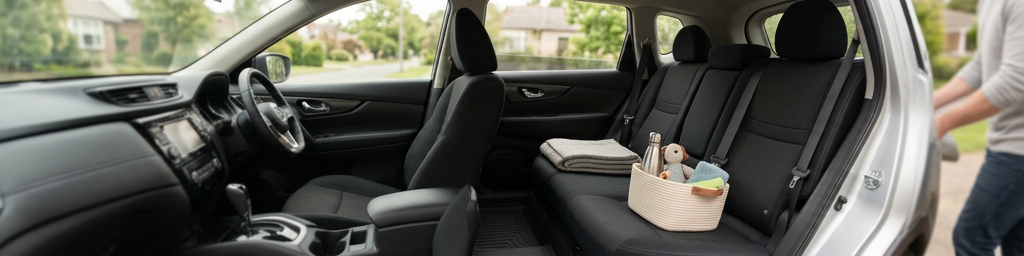
Even when surfaces are clean, scattered belongings make the space feel chaotic. Toys, chargers, water bottles, sports kit, and shopping bags quickly cover seats and footwells. Simple organizers turn that chaos into something manageable. Seat‑back pockets can hold books, headphones, wipes, and a small toy or two for each child. A shallow crate or soft box in the luggage area keeps reusable bags, balls, and boots together instead of rolling around. Door pockets and the console can be assigned roles—such as “drinks only” or “documents only”—so they don’t turn into catch‑all dumping grounds. When every type of item has a usual spot, tidying takes seconds rather than feeling like a full clear‑out.
Easy rules that families can actually follow
Strict systems rarely last in a busy household, so simple, clear rules work better. Many families use “one toy per child” and “everything that goes in comes out again” as basic guidelines. When you arrive home, everyone grabs their own belongings—coats, bottles, books—and carries them inside. Keeping a foldable tote in the door pocket makes collecting everything in one trip easier. A small, labeled pouch for each child on the seat‑back can become their personal space for entertainment items, making them more likely to put things away. The aim is not perfection, but less stress and fewer arguments about lost objects and messy seats.
| Family habit or rule | How it helps the interior stay calm |
|---|---|
| “One toy or book per child” | Limits floor clutter and makes tidying quick for everyone |
| “Nothing sleeps in the car” | Stops slow build‑up of clothes, cups, and school items |
| Weekly five‑minute reset | Clears the worst mess before it feels overwhelming |
| Seat‑back pocket per passenger | Gives kids a clear, reachable place for their belongings |
Short “reset” moments that keep chaos away
Regular, tiny resets are more powerful than rare, heroic clean‑ups. Picking one time each week—a certain evening, or after the supermarket trip—to spend just five or ten minutes on the interior keeps clutter under control. That slot can be used to empty bins, remove forgotten items, gather laundry, and quickly straighten organizers. Linking this to routines that already exist makes it easier to remember: perhaps whoever drives last that day does the reset before locking the car. Over time, the vehicle feels more like a comfortable extension of home and less like a travelling storeroom.
Q&A
-
How often should I perform basic seat fabric care to keep upholstery looking fresh?
For family cars used daily, vacuum seats weekly and spot‑clean spills within 24 hours. Do a deeper fabric shampoo or steam clean every 3–6 months, adjusting for kids, pets, and allergy concerns. -
What’s the safest way to handle dashboard dust removal without damaging surfaces or screens?
Use a soft microfiber cloth slightly dampened with water for general dust, and a separate clean cloth for screens. Avoid household cleaners and strong solvents; instead choose pH‑neutral, automotive‑specific interior products. -
Which odor prevention basics work best in a family car with kids and pets?
Tackle sources first: remove trash daily, clean spills immediately, and regularly wash floor mats. Combine this with good ventilation, a cabin filter changed on schedule, and occasional fabric deodorizing, not just fragrance cover‑ups. -
What simple detailing habits can improve everyday vehicle comfort without taking much time?
Adopt quick, repeatable routines: shake out mats weekly, wipe high‑touch areas every few days, and keep a small interior kit in the trunk. These five‑minute habits prevent buildup and make longer detailing sessions much easier. -
How does consistent family car hygiene impact long‑term comfort and resale value?
Clean interiors reduce allergens, lingering odors, and fabric wear, making daily drives more pleasant. Over time, well‑maintained seats, plastics, and odor‑free cabins photograph better, appeal more to buyers, and support higher resale prices.