
Battery Storage at the Heart of Reliable Solar, Wind and Cleaner Power Grids
Solar and wind projects are expanding quickly, yet their output rarely matches when people actually need electricity. Bridging that gap increasingly depends on systems that can store surplus power for later use, stabilize local networks, and provide dependable support when weather conditions suddenly change.
This story is part of Esgamesol's practical reading library across everyday topics.
From backup option to essential grid tool
Why variable renewables need a buffer
For decades, electricity systems were built around large stations that could ramp up or down on command. Solar arrays and wind farms flipped that logic. They generate whenever nature allows, not when dinner is cooking, office towers are lit, or transport fleets are charging. The result is a constant mismatch between natural output and human routines. Midday often brings abundant sunshine but moderate demand, while evenings bring busy households and fading light. Wind patterns can be strong at night or calm for several days. Without a buffer, grid operators must keep flexible fossil‑fuel units ready, turning them up and down to chase the weather. Storage changes this equation by acting as a shock absorber between unpredictable production and constantly shifting demand, letting clean power behave more like a controllable resource.
From “nice to have” to part of core infrastructure
Once storage is added, surplus clean electricity is no longer “use it now or lose it.” It can be captured when it is plentiful and released when it is valuable. Large projects connected directly to transmission networks are already playing this role, charging when sunshine or strong winds flood the system and discharging during evening peaks or sudden shortfalls. Smaller systems in homes and businesses do something similar at the local level. The psychological shift is important: planners no longer treat storage only as an emergency spare tire, but as part of the main drivetrain. It helps avoid unnecessary curtailment of renewable output, reduces the need for expensive peaking units, and supports reliability services once provided only by large rotating machines.
How storage tames solar at noon and wind at night
Turning midday solar peaks into reliable evening supply
Across many grids, solar output swells around lunchtime, precisely when demand may be modest. As afternoon turns to evening, household activity climbs just as solar production falls away. Storage solves this timing clash through energy shifting. Paired directly with solar farms or rooftop systems, batteries absorb a portion of midday generation that the grid cannot immediately use. A few hours later, that stored energy flows back onto the network, softening the steep ramp that operators would otherwise face. This pattern raises the economic value of each kilowatt‑hour of solar, extends the apparent “solar day” into the evening, and cuts the need to fire up fast‑acting fossil‑fuel plants for only a couple of hours.
Smoothing gusty wind and long lulls
Wind behaves differently from solar. Instead of strong midday peaks, output tends to follow larger‑scale weather systems, with hours of high production followed by stretches of relative calm. Short‑term gusts and dips can cause rapid swings that stress the grid. Storage, especially batteries, excels here because it can react in fractions of a second. When winds suddenly pick up, storage absorbs the excess, preventing overloading of lines. When they ease, it discharges to keep flows smoother. Over longer periods, storage near remote wind farms can ease congestion on transmission corridors, soaking up power when lines are full and slowly releasing it later. That flexibility allows operators to tap more wind potential without immediately building new wires.
Turning weather‑driven assets into dependable capacity
Grid planners care deeply about “firm” capacity they can rely on during critical hours. On their own, solar and wind struggle to guarantee output for a particular evening peak or cold snap. Combined with storage sized for several hours, they can behave much more like dependable plants. A solar‑plus‑storage site can commit to delivering a stable block of power through the late afternoon, while a wind‑plus‑storage facility can promise overnight output. This ability to make firm commitments changes how projects are financed and rewarded, enabling them to join capacity markets and reliability programs instead of selling only “when available” energy.
The main families of storage technologies
Lithium‑ion systems: today’s workhorse
Lithium‑ion technology currently anchors most new grid‑connected storage. Projects range from shipping‑container‑sized installations at substations to larger fields of cabinets near solar farms. Their key strengths are high efficiency, rapid response, and relatively short build times. These characteristics make them ideal for tasks like shifting solar a few hours, providing frequency support, and covering short peaks in demand. There are trade‑offs: lifetime degrades with heavy cycling and high temperatures, and careful design is needed for safety and fire management. Even so, lithium‑ion remains the default choice for many utilities and commercial users seeking flexible storage with durations of two to four hours.
Flow batteries and other long‑duration options
As renewable penetration rises, attention is turning to solutions that can deliver energy for longer stretches. Flow batteries are a prominent candidate. They store energy in liquid electrolytes held in external tanks, which are pumped through electrochemical cells when charging or discharging. Power and energy capacity can be scaled somewhat independently: larger tanks mean more hours without enlarging the cell stack. Flow systems typically have lower energy density and need more space than lithium‑ion, but they can handle frequent, deep cycling and are well‑suited to multi‑hour applications. Alongside them are options such as compressed‑air systems, gravity‑based designs, and advanced thermal concepts that store energy as heat or cold and later convert it back to electricity.
Where different technologies tend to fit
Different storage families are suited to different roles within cleaner power systems. The table below sketches typical fits without claiming hard boundaries or universal rankings.
| Use case or feature focus | Well‑matched approaches (illustrative) |
|---|---|
| Sub‑second to minute‑level grid support | Lithium‑ion batteries, flywheels |
| Daily solar shifting (2–4 hours) | Lithium‑ion, some flow battery configurations |
| Multi‑hour to multi‑day coverage | Flow batteries, compressed air, thermal concepts |
| Very large, site‑specific projects | Pumped hydro, underground compressed air |
These matches reflect broad tendencies. Actual choices depend on local geography, policy, engineering constraints and project‑specific economics rather than a universal rulebook.
Why storage strengthens reliability and helps manage costs
Keeping frequency and voltage in safe ranges
Modern electricity networks must keep frequency and voltage within tight bands. Previously, big spinning generators provided inertia that naturally resisted sudden changes. As more inverter‑based solar and wind come online, that inherent stability declines. Storage compensates by acting as a highly responsive stabilizer. Power electronics detect small deviations and instantly adjust charging or discharging to counter them. This rapid response is valuable during both routine fluctuations and rare disturbances, reducing the risk of cascading failures. In many markets, storage now competes directly with conventional plants to provide services like frequency regulation, reserve capacity and fast ramping.
Avoiding over‑building wires and peaking plants
Grids are traditionally sized to meet rare peak hours, even if that infrastructure sits under‑used most of the year. Storage makes it possible to shave those peaks instead. By charging during low‑demand periods and discharging when loads climb, it reduces the maximum stress on power lines, transformers and generators. In commercial and industrial facilities, this can lower demand‑based charges and delay the need for costly grid upgrades. Strategically placed community‑scale systems can also relieve congestion in specific neighborhoods, allowing more local solar projects to connect without immediate reinforcement of distribution networks. Over time, these avoided or deferred investments can be substantial.
Supporting cleaner portfolios and local resilience
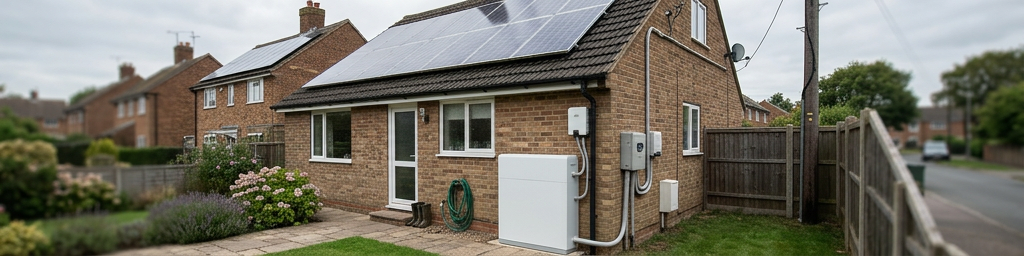
Policy frameworks across English‑speaking regions increasingly recognise that reaching high shares of clean electricity requires more than just adding wind turbines and solar panels. Storage features in many procurement plans, reliability standards and incentive schemes. By allowing renewable projects to deliver energy when required, storage improves their credit in long‑term planning models and financing structures. At street level, pairs of rooftop solar and batteries let households keep essential loads running during outages, while business‑scale systems protect against grid disturbances that might otherwise halt operations. Clusters of these distributed assets can be coordinated as virtual plants, offering grid services while boosting local resilience.
The rise of long‑duration solutions
Moving from hourly balancing to multi‑day coverage
Early deployment focused on a few hours of storage, enough to stretch solar into the evening or cover short wind dips. As variable renewables grow, the need to handle multi‑day patterns becomes more pressing: slow‑moving weather systems can suppress both solar and wind over wide areas, while extreme heat or cold can keep demand elevated for days. Long‑duration storage addresses this by holding much larger energy volumes and releasing them slowly. It does not eliminate the need for other flexible resources, but it can reduce reliance on fuel‑based plants during prolonged stress, and it creates more headroom for clean generation during good weather by absorbing surplus instead of curtailing it.
Combining multiple timescales for a resilient mix
No single technology covers every timescale efficiently. Fast‑acting batteries excel at seconds to hours, flow batteries and compressed air target the multi‑hour range, and pumped hydro or some thermal concepts can stretch into multi‑day roles. A resilient system combines these layers rather than betting on one winner. Short‑duration assets keep frequency tight and manage daily cycles, while long‑duration units handle rare but challenging events. The table below sketches how different user groups might interact with this layered mix.
| User group or planner perspective | Storage priorities that often matter most |
|---|---|
| Homeowners with rooftop solar | Evening self‑consumption, outage backup |
| Commercial / industrial facilities | Peak management, reliability, power‑quality |
| Grid operators and planners | System stability, capacity adequacy, congestion relief |
| Policymakers and regulators | Emissions reduction, investment signals, affordability |
These perspectives are not mutually exclusive, but they shape which durations and technologies receive attention and support in different regions.
A quiet but decisive transformation
Most storage units sit in plain containers or buildings, with little visual drama compared with turbine blades or solar fields. Yet they are quietly reshaping how electricity systems work. By separating when energy is produced from when it is used, storage lets wind and solar move from weather‑dependent contributors to central pillars of dependable supply. It unlocks more value from existing infrastructure, reduces waste from curtailment, and gives operators and consumers more tools to cope with uncertainty. As more projects come online and long‑duration options scale, storage is set to move even further from backup role to structural backbone of cleaner, more reliable power systems across English‑speaking regions.
Q&A
-
How are current battery technology trends reshaping grid energy balancing strategies?
Advances in lithium‑ion, sodium‑ion and solid‑state batteries enable faster response, higher cycle life and smarter controls, letting operators replace peaker plants, smooth renewables and run more granular, real‑time balancing markets. -
What role does solar power storage play in strengthening clean energy infrastructure?
Solar storage shifts midday surplus to evening peaks, stabilizes voltage, reduces curtailment, and allows distribution grids and microgrids to host far more rooftop and utility‑scale PV without costly network reinforcements. -
Why are dedicated wind energy backup systems becoming critical as wind penetration grows?
Wind‑paired storage mitigates forecast errors, ramps through sudden wind drops, supports synthetic inertia and frequency control, and lets wind farms offer firm, tradable capacity instead of only variable energy. -
How do long duration storage solutions differ from conventional batteries in supporting the grid?
Long duration options like flow batteries, thermal and hydrogen storage provide multi‑hour to multi‑day discharge, enabling seasonal shifting, deep backup and resilience that short‑duration lithium‑ion alone cannot deliver. -
What design principles are key when integrating storage into clean energy infrastructure projects?
Projects must co‑optimize location, duration, interconnection capacity, market revenues, cybersecurity and lifecycle impacts, ensuring storage enhances reliability and decarbonization while remaining financeable over decades.